Why Are Iranian Films So Difficult to Find?
Many film lovers know the frustration. You come across an interesting Iranian film on social media or in a recommendation list and decide you want to watch it. But once you start looking, you hit a dead end. The film isn’t available on the major streaming platforms. If you do find it, it’s often on a questionable website with a poor-quality copy. In other cases, it’s available only without English subtitles. So why are Iranian films so difficult to access?
At first glance, international sanctions against Iran may seem like the obvious explanation. They do make financial transactions and business relationships between Iranian institutions and foreign partners more complicated. But sanctions alone don’t explain why Iranian cinema remains so difficult to find. After all, many Iranian films are legally distributed outside the country. The real reasons are far more complex.
To begin with, Iranian cinema occupies a relatively small niche in the global film market. While Hollywood productions attract audiences of millions, most Iranian films appeal to a much smaller community of viewers interested in world cinema and arthouse filmmaking. Lower demand means fewer distributors willing to acquire distribution rights, fewer Blu-ray releases, and a more limited presence on streaming platforms.
Another challenge is the condition of the original film materials. Many important pre-revolutionary films remained inaccessible for decades because high-quality negatives no longer existed or the surviving prints were damaged. Some were even believed to be lost altogether. A well-known example is Chess of the Wind (Shatranj-e Bad, 1976) by Mohammad Reza Aslani. The film was rediscovered only after several decades and was restored digitally afterward.
Even rediscovering a film doesn’t guarantee a new release. Film restoration is both technically demanding and extremely expensive. It requires an institution willing to fund the project, as well as suitable source materials to work from. Those materials are not always available. The restoration of Bahram Beyzaie’s Downpour (Ragbar, 1972) illustrates the challenge. It relied on the only known surviving release print with English subtitles, preserved by the director himself. The other known film elements had been confiscated in Iran and were most likely destroyed. As a result, the restoration required extensive physical repair and digital reconstruction.
Copyright can be just as complicated. A distributor cannot release a film simply because it is considered an important work of the Iranian New Wave. The ownership of international distribution rights must be established, a licensing agreement must be negotiated, and access to the original film materials must be secured. For many older Iranian films, however, the original production companies no longer exist, and ownership is often unclear. Resolving these issues can delay a release for years.
Finally, there is the issue of regional licensing on streaming services. A film that is available on MUBI in the United States may not be accessible to viewers in Europe or Asia. Streaming rights are typically licensed territory by territory, which is why the catalog of a platform can vary dramatically from one country to another.

Best Streaming and Online Platforms for Iranian Films
If you’re looking for the short answer, the table below highlights the best legal places to watch Iranian films today. The sections that follow take a closer look at each platform, including its strengths, limitations, and the types of films you can expect to find.
| Platform | Type | Availability | Best for |
| Criterion Channel | Subscription | US, Canada | Curated classics |
| MUBI | Subscription | 195+ countries | Festival & contemporary cinema |
| Amazon | TVOD (Rent / Buy) | Worldwide | Individual film rentals |
| Kanopy | Free | Libraries & universities | Free classics |
| IMVBox | Free / SVOD | Worldwide | Lesser-known Iranian films |
The Criterion Channel
If you live in the United States or Canada, The Criterion Channel is one of the best places to discover Iranian cinema. Although the service is officially available only in those two countries, it offers one of the most thoughtfully curated collections of Iranian films anywhere.
One of the platform’s greatest strengths is its ability to showcase films that have never received a Blu-ray release or are otherwise extremely difficult to see. These include Naghmeh Abbasi’s Landscape Suspended (2022), Forugh Farrokhzad’s landmark documentary The House Is Black (Khaneh Siah Ast, 1963), and the recently restored The Sealed Soil (Khak-e sar be mohr, 1977), directed by Marva Nabili—the first feature film by an Iranian woman director.
The Criterion Channel is much more than a streaming service. It functions as a curated film library, offering interviews, documentaries, and other supplementary materials that place each film in its historical and cultural context. Highlights include The Majnoun of the Wind (2022), a documentary about the restoration of Chess of the Wind, and an interview with Bahram Beyzaie discussing the making of Downpour.
Watch The House Is Black here
Watch The Sealed Soil here

MUBI
Unlike The Criterion Channel, MUBI is available in more than 195 countries, making it one of the most accessible streaming platforms dedicated to world and festival cinema. That said, its catalog is not the same everywhere. Distribution rights are licensed on a country-by-country basis, so the selection of Iranian films can vary significantly depending on where you live.
Before subscribing, it’s worth checking whether a specific film is available in your region through MubiFinder, which tracks MUBI’s catalog across different countries.
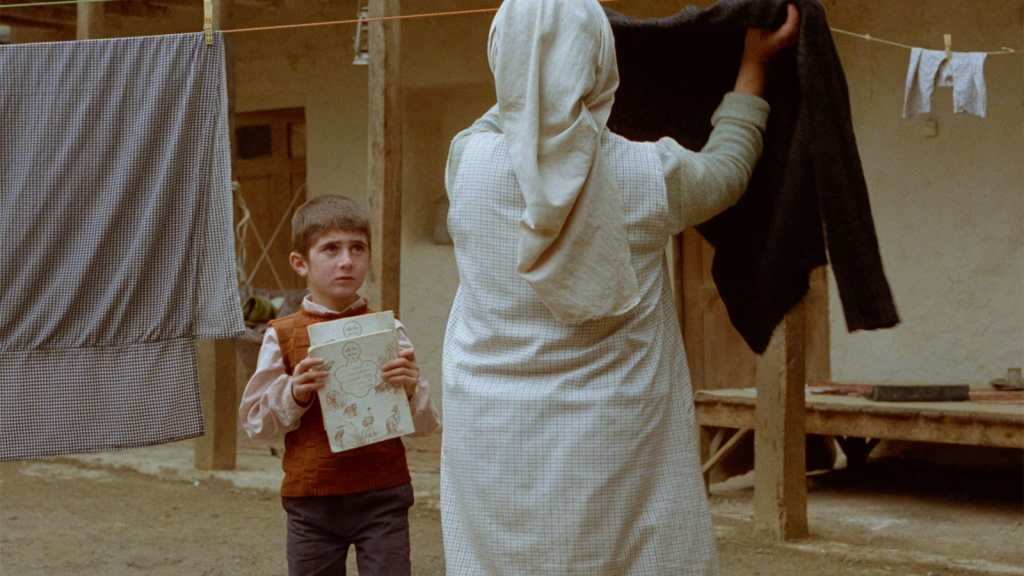
MUBI regularly features major works of Iranian cinema, including Dariush Mehrjui’s The Cow (Gaav, 1969), Jafar Panahi’s The White Balloon (Badkonak-e Sefid, 1995), and Samira Makhmalbaf’s The Apple (Sib, 1998). Alongside these classics, the platform frequently adds recent festival favorites from Iran.
Watch The White Balloon here
Watch The Apple here
Amazon
Amazon follows a different distribution model. While it offers a surprisingly large selection of Iranian films, most are not included with a Prime Video subscription. Instead, they are available through Amazon’s digital store as individual rentals or purchases. This is known as Transactional Video on Demand (TVOD), meaning you pay separately for each title. Only a small portion of the catalog is included with Prime Video, one example being Asghar Farhadi’s A Hero (Ghahreman, 2021). If you’re searching for a specific film, it’s always worth checking whether it’s included with a Prime Video subscription or available only to rent or buy.
One of Amazon’s biggest advantages is the breadth of its catalog. In addition to well-known titles, you’ll find harder-to-access films by Farhadi, including his early features Dancing in the Dust (Raghs dar ghobar, 2003) and Beautiful City (Shahr-e Ziba, 2004). The platform also offers Mohammad Rasoulof’s There Is No Evil (2020) and The Seed of the Sacred Fig (2024), Majid Majidi’s Children of Heaven (Bacheha-ye Aseman, 1997), Baran (2001), The Song of Sparrows (2008), and Sun Children (Khorshid, 2020), as well as Panah Panahi’s acclaimed debut Hit the Road (Jadde Khaki, 2021).
Amazon is also a great place to find films made by Iranian diaspora filmmakers, as well as international co-productions. Notable examples include Persepolis (dir. Marjane Satrapi, Vincent Paronnaud , 2007), Under the Shadow (dir. Babak Anvari, 2016), Yalda, a Night for Forgiveness (dir. Massoud Bakhshi, 2019), Holy Spider (dir. Ali Abbasi, 2022), The Persian Version (dir. Maryam Keshavarz, 2023), and Shayda (dir. Noora Niasari, 2023).
Rent or Buy Dancing in the Dust here
Rent or Buy Beautiful City here
Rent or Buy A Separation here
Rent or Buy There Is No Evil here
Rent or Buy The Seed of the Sacred Fig here
Rent or Buy Shayda here

Free and Legal Ways to Watch Iranian Films
While many of the most important Iranian films are available only through paid streaming services or digital rental and purchase platforms, there are still several completely legal ways to watch them for free.
Kanopy
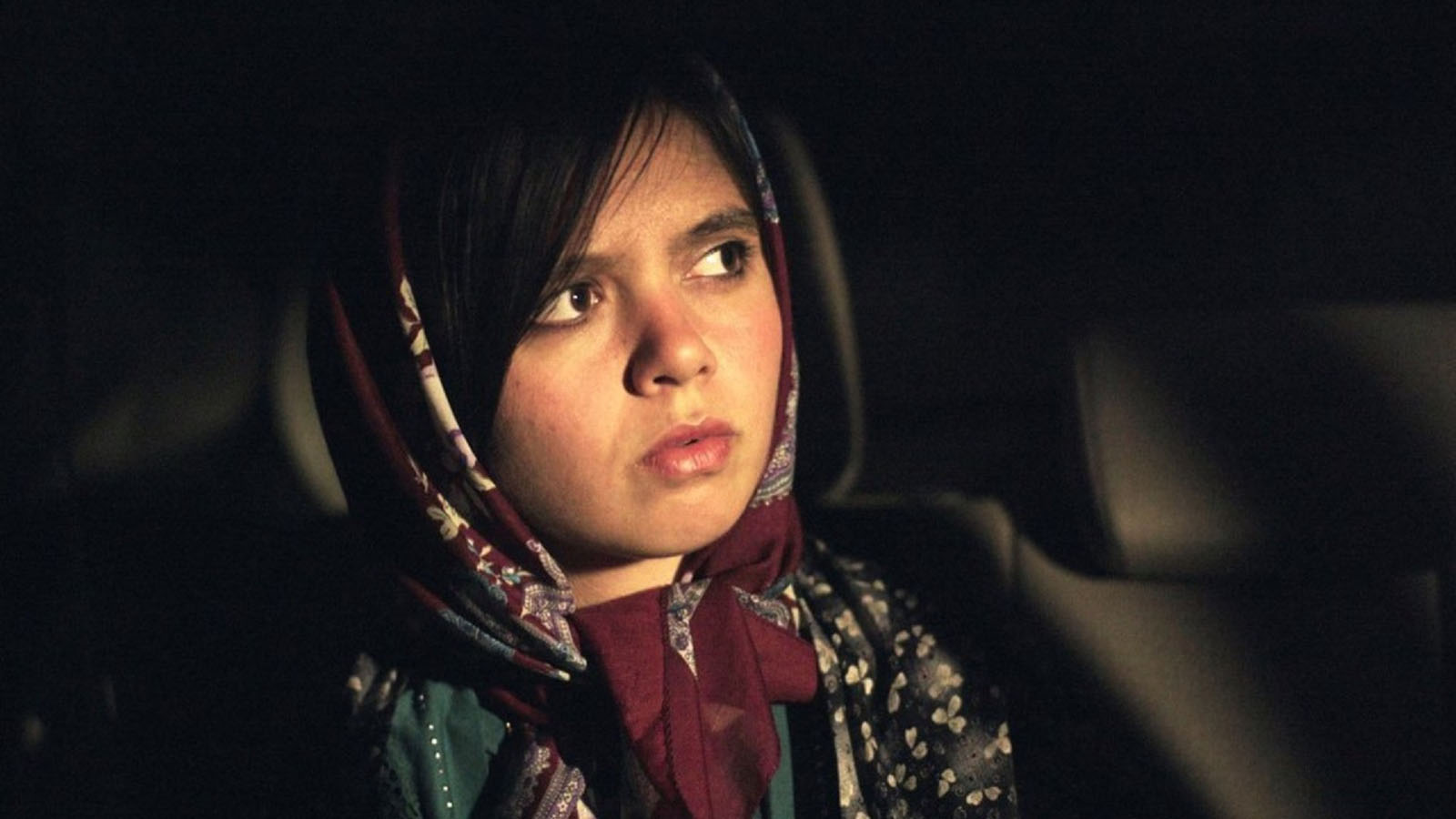
One of the best free options is Kanopy, a streaming platform specializing in world cinema, independent films, and documentaries. Its catalog includes a number of outstanding Iranian titles, including Panahi’s 3 Faces (Se Rokh, 2018) and Ana Lily Amirpour’s vampire western A Girl Walks Home Alone at Night (2014). Kanopy is also currently the only platform offering the recently restored version of Sohrab Shahid Saless’s Far from Home (1975).
Kanopy partners with public libraries and universities. If your local library or educational institution offers the service, you can stream its entire catalog at no cost—the subscription is paid for by the institution. It’s an excellent way to watch films legally, without ads or additional fees.
Watch 3 Faces here
Watch A Girl Walks Home Alone at Night here
Watch Far from Home here

YouTube and IMVBox
Official YouTube channels are another valuable resource. While you won’t find every classic of Iranian cinema, some distributors and cultural organizations legally make selected films available for free.
One of the most valuable resources is IMVBox. Its official YouTube channel serves as one of the largest freely accessible collections of Iranian films online. It offers dozens of feature films with English subtitles, many of them lesser-known works that rarely appear on major streaming platforms. If you’re looking to explore Iranian cinema beyond the festival favorites, IMVBox is an outstanding—and entirely legal—place to start.
Best Blu-ray Labels for Iranian Films
In the age of streaming, physical media may seem old-fashioned. For arthouse cinema, however, Blu-ray remains one of the best ways to experience many Iranian classics in the highest available picture quality. Beyond superior video and audio, Blu-ray editions often include valuable supplementary features, such as interviews, documentaries, and scholarly essays. For many cinephiles, they’re also collectible objects, much like books or vinyl records.
The Criterion Collection
When it comes to Iranian cinema on Blu-ray, no label has had a greater impact than The Criterion Collection. For years, Criterion has released meticulously restored editions of some of the most important works of the Iranian New Wave.
Among its essential releases is The Koker Trilogy, collecting Abbas Kiarostami’s Where Is the Friend’s House? (Khane-ye dust kojast?, 1987), And Life Goes On (Zendegi va digar hich, 1992), and Through the Olive Trees (Zire darakhtan-e zeyton, 1994). Criterion has also released several of Kiarostami’s other masterpieces, including Close-Up (Nema-ye nazdik, 1990), Taste of Cherry (Ta’m-e gilas, 1997), and The Wind Will Carry Us (Bad ma ra khahad bord, 1999).
Buy Where Is the Friend’s House? on Blu-ray here
Buy Taste of Cherry on Blu-ray here


Criterion’s commitment extends beyond Kiarostami’s best-known films. Through Eclipse Series 47: Abbas Kiarostami – Early Shorts and Features, it introduced audiences to his early pre-revolutionary work. The set includes the feature films The Traveler (Mossafer, 1974), and A Wedding Suit (Lebasi Bara-ye Arusi, 1976), along with short films such as Bread and Alley and Breaktime, offering invaluable insight into the formative years of one of world cinema’s most influential filmmakers.
Buy The Traveler on Blu-ray here
Buy A Wedding Suit on Blu-ray here
Criterion has also played an important role in preserving endangered films. In collaboration with Martin Scorsese’s World Cinema Project, the label released restored editions of Bahram Beyzaie’s Downpour and Mohammad Reza Aslani’s Chess of the Wind. Other notable releases include Amir Naderi’s The Runner (Davandeh, 1984) and Jafar Panahi’s It Was Just an Accident (Yek tasadof-e sadeh, 2025), winner of the Palme d’Or at the Cannes Film Festival. More than a Blu-ray publisher, Criterion has become one of the leading institutions dedicated to preserving and making Iranian film heritage accessible to new audiences.
Buy Downpour on Blu-ray here
Buy The Runner on Blu-ray here
Buy It Was Just an Accident on Blu-ray here
Curzon
Another label worth exploring is the British distributor Curzon (formerly Artificial Eye and later Curzon Artificial Eye), which has long specialized in world cinema. Its catalog includes Blu-ray editions of Asghar Farhadi’s A Separation (2011) and The Salesman (2016), among many other international classics. Although Curzon’s selection of Iranian films is smaller than Criterion’s, it remains an excellent source for high-quality physical editions.
Iran Zamin Cinema is an independent, ad-free publication dedicated to Iranian cinema. Support the project on Buy Me a Coffee and help keep thoughtful essays and film analysis freely available.


Leave a Reply