Creative freedom and the absence of censorship do not automatically produce nuanced or intellectually open works. Iranian exile cinema and Persian-language satellite television are far from ideologically uniform. Yet they can also share a similar vision of Iran: the present is portrayed as a landscape of repression, while the pre-1979 era emerges as a lost horizon of freedom. In recent years, this narrative has become increasingly intertwined with the diaspora’s support for Crown Prince Reza Pahlavi. That support has also taken the form of an audiovisual cult surrounding his political role.
Exile Cinema Between Freedom and Ideology
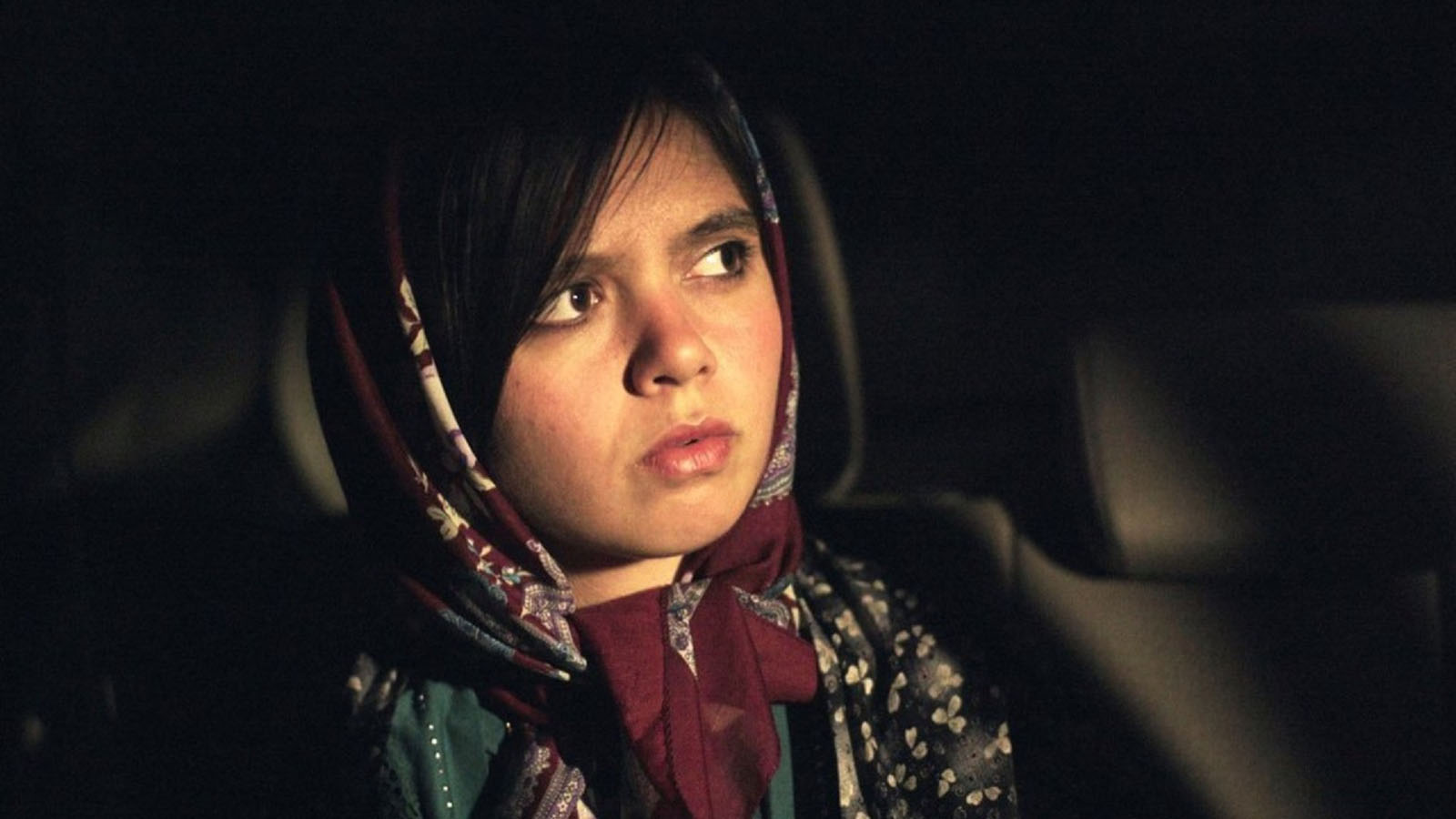
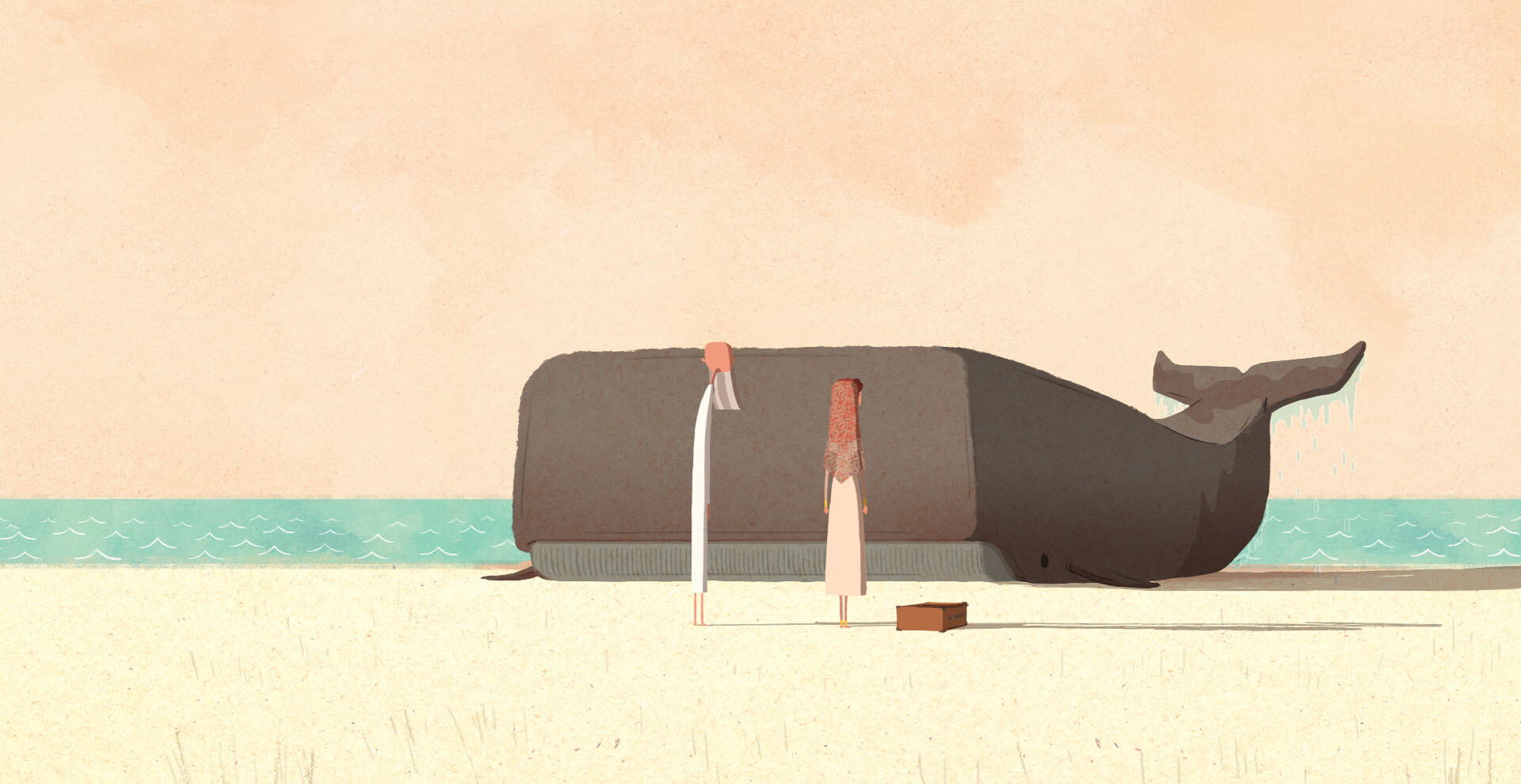
Contemporary filmmaking by the Iranian diaspora in the United States, Canada, Australia, and Europe benefits from the freedom to address politics and social pathologies without censorship. At times, however, this critical perspective gives way to a striking degree of simplification. Films such as A Girl Walks Home Alone at Night (dir. Ana Lily Amirpour, 2014) and Holy Spider (Ankaboot-e Moqaddas, dir. Ali Abbasi, 2022) foreground the punishment of toxic masculinity. The animated feature Tehran Taboo (dir. Ali Soozandeh, 2017) defines its misogynistic male characters more by their ideological function than by psychological complexity.
The strength of these films lies in their inventive use of genre, their visual style, their atmospheric power, and their critique of religious fanaticism. Their cultural significance for global audiences does not primarily rest on offering a nuanced portrait of Iranian society. Rather, they introduce feminist themes through the unfamiliar setting of contemporary Iran. In this respect, they differ markedly from the work of Asghar Farhadi or Jafar Panahi, whose films resist moral absolutism and preserve irony, ambiguity, and empathy for all sides.
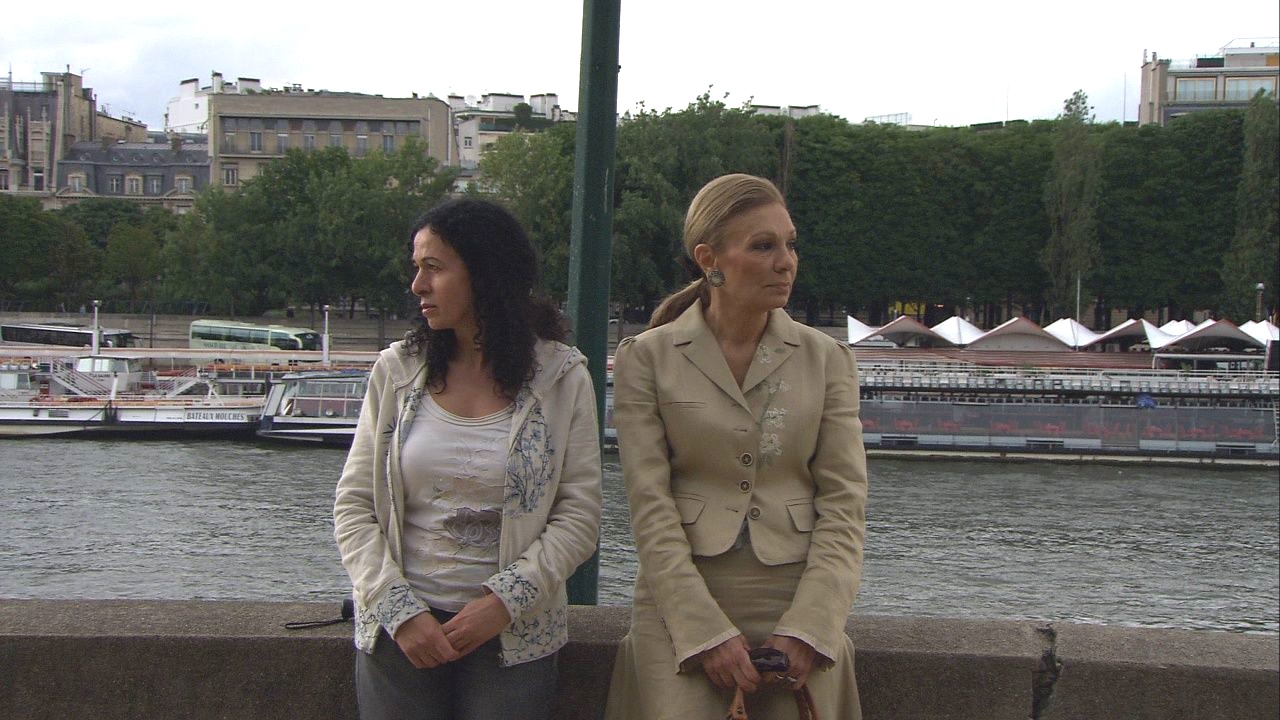
A compelling departure from this more straightforward rhetoric can be found in Nahid Persson Sarvestani’s Swedish documentary The Queen and I (Drottningen och jag, 2008). The film follows an unlikely encounter between two women who stand on opposite sides of modern Iranian history: Persson Sarvestani, a former communist who actively participated in the revolution that overthrew the monarchy, and Iran’s last queen, Farah Pahlavi. Rather than becoming a conventional political documentary, the film evolves into an intimate meditation on exile, memory, and the shifting nature of historical perspective.

What makes the documentary remarkable is the way ideological conflict gradually recedes into the background and gives way to a deeply personal relationship. Farah is presented as more than a political symbol. She becomes a woman marked by personal loss and by the trauma of watching the world that once defined her identity disappear. As the bond between filmmaker and subject deepens, the film subverts the expectations of a confrontational political documentary and opens the door to a more nuanced understanding of exile.
Over time, Persson Sarvestani realizes that Farah reacts defensively to any questions about the monarchy’s repressive character. Although the director cautiously attempts to steer their conversations toward a critical reflection on the Pahlavi regime, these efforts ultimately lead nowhere. The film openly acknowledges this limitation through Persson Sarvestani’s voice-over, in which she admits that she has lost the critical distance expected of a documentarian. She explains that, although she never embraced monarchism, she gradually came to admire Farah as a person. This inner tension becomes even more apparent when she begins referring to Farah’s late husband as “Ala Hazrat” (“His Imperial Majesty”) and to her son as “Vali Ahd” (“Crown Prince”).
The Queen and I is not a pro-monarchist film. Yet it leaves Farah as an undeniably sympathetic figure, indirectly softening the historical image of the Pahlavi era. Viewers familiar with the fact that the Shah’s leftist opposition—to which Persson Sarvestani herself belonged—was one of the primary targets of forced confessions and political persecution may read the film as echoing a similar dynamic. The director’s regret over her former communist activism suggests that the symbolic power of monarchist discourse continues to shape parts of the Iranian exile community long after leaving Iran.
Monarchy as Television Nostalgia
Anthropologist Narges Bajoghli poses a provocative question: “Why are young Iranians now calling for the return of the Pahlavis’ rule? The short answer is television—specifically, satellite stations run by Iranian exiles.”1 Many Iranians may not realize it, but these channels have helped create the impression that Crown Prince Reza Pahlavi enjoys broad popular support. That image exceeds his actual ability to mobilize support. The Iranian diaspora, of course, encompasses a wide spectrum of political views. The discussion that follows focuses only on a set of increasingly influential tendencies.
Over the past two decades, Persian-language satellite television has become one of the most significant media phenomena in the Iranian public sphere. Its origins lie in the exile community that settled primarily in Los Angeles after 1979 and began broadcasting television into Iran during the 1990s. As satellite dishes became more widespread, the Iranian state gradually lost its ability to block these channels effectively. Foreign-based television evolved into a powerful parallel media sphere.
A turning point came in 2010 with the launch of the London-based channel Manoto. Unlike Persian-language news broadcasters such as BBC Persian or Voice of America Persian, Manoto wrapped politics within an appealing entertainment format. Reality shows, talent competitions, and historical documentaries created the aesthetic of a modern television network that many Iranian households embraced as an alternative to state broadcasting. Its apparent political neutrality proved to be its greatest strength. Rather than seeking ideological programming, younger viewers were more interested in its image of a liberal lifestyle.
The channel’s monarchist leanings were most visible in Time Tunnel (Tonnel-e Zaman, Kayvan Abbassi and Marjan Abbassi, 2013). Through archival footage, idealized portrayals of the royal family, and nostalgic popular music, the series reconstructs pre-revolutionary Iran as a world of elegance, prosperity, and cultural openness. Women in miniskirts, nightclubs, alcohol, and dancing become visual shorthand for freedom and modernity—symbols that disappeared from public life after the revolution. The result is a nostalgic narrative in which the Pahlavi era is remembered as a lost paradise of modernization.

What matters even more, however, is what the series leaves out: political repression, social inequality, and the violence of the Pahlavi state. This selective historical memory reached its clearest expression in 2024, when Manoto aired a seven-hour documentary interview with Parviz Sabeti, a senior official in the Shah’s secret police, SAVAK. The channel gave him an uninterrupted platform to defend the organization’s record without offering any meaningful critical perspective. Sabeti portrays the secret police as a professional institution responding to security threats posed by armed opposition groups. Historically, however, SAVAK functioned as the regime’s principal instrument of repression. It systematically employed torture and persecuted political dissidents, including prominent writers and intellectuals. Manoto is therefore more than a nostalgic television channel—it actively reshapes political memory.
Another influential broadcaster, Iran International, was launched in London in 2017. It quickly became one of the most prominent exile media outlets during periods of mass protest and regional crisis. Unlike Manoto, it relies less on nostalgia or entertainment. Its programming centers on news coverage, interviews, and political commentary that directly shape public interpretations of events unfolding inside Iran and across the diaspora.
Looking for a legal way to watch Iranian films?
Explore the complete guide →
From the beginning, however, questions have surrounded the channel’s financial backing. The Guardian reported that Iran International was funded through networks closely connected to Saudi Crown Prince Mohammed bin Salman. Those revelations immediately sparked debate over the station’s editorial independence. The channel presents itself as the voice of Iran’s democratic opposition, yet it operates within a geopolitical environment where media strategies often overlap with regional interests.
The channel’s treatment of Crown Prince Reza Pahlavi, who lives in exile in the United States, illustrates this editorial pattern. The preferential treatment rarely takes the form of direct misinformation. Instead, it emerges through editorial selection. Certain voices are consistently amplified and idealized, while others receive comparatively little attention. Scholars critical of the geopolitical influence of the United States, Israel, or Saudi Arabia appear far less frequently. The cumulative effect is a media environment that gradually legitimizes Pahlavi as the only viable alternative to the Islamic Republic.
This dynamic became particularly visible during coverage of the most recent nationwide wave of protests at the turn of 2025 and 2026. Mazdak Azar’s study, Analysis of Media Performance in Covering the January 2026 Protests in Iran,2 examined recorded protest slogans and found that the demonstrations were united primarily by opposition to the Islamic Republic—not by support for Pahlavi. The slogan heard most frequently was “Marg bar dictator” (“Death to the dictator”), a long-standing expression of resistance to authoritarian rule. Only 17 percent of the documented slogans explicitly mentioned either “Pahlavi” or the “Shah.” In Iran International’s selection of protest footage, however, slogans invoking “Pahlavi” or the “Shah” accounted for 81 percent of those broadcast. The result was a media representation that overstated monarchist sentiment by 376 percent compared with its actual prevalence in the available recordings.

Many more examples could illustrate this ideological tendency within Iran International. One recent interview will suffice. During a conversation with Reza Pahlavi conducted by host Morad Vaisi,3 the interviewer described the Iranian protest movement using monarchist symbols such as the “Lion and Sun Revolution.” He also framed the military intervention of the United States and Israel, echoing Pahlavi’s own rhetoric, as “assistance to the Iranian people.” When Pahlavi referred to the existence of the “Gard-e javidan” (“Immortal Guard”)—an alleged network of loyal supporters operating inside Iran—the interviewer accepted the vague claim without asking for evidence or clarification.
The interview therefore functions less as an exercise in critical journalism than as a platform for advancing the political narrative of a particular faction. Within this rhetoric, Iranians are cast as the mythical hero Kaveh fighting the demonic tyrant Zahhak in an epic struggle between light and darkness. Ironically, this is precisely where the rhetoric of exile monarchism begins to resemble that of the Islamic Republic’s state television. The latter similarly relies on powerful symbolic narratives, drawing on Shi’a imagery centered on the martyrdom of Imam Husayn.
In the Grip of Radicalization
During the Iranian Revolution, rumors spread widely that the face of Ruhollah Khomeini had appeared on the Moon. For many believers, it was seen as a divine sign affirming the revolutionary movement. To this day, many people remain convinced that the Persian-language service of the BBC—then regarded by many Iranians as a trustworthy broadcaster—reported the story of “Khomeini on the Moon,” thereby helping legitimize the new regime. For that reason, opponents of the revolution still mockingly refer to the broadcaster as “BBC Ayatollah,” despite the fact that its Persian-language programming has long been banned in Iran because of its consistently critical coverage of the Islamic Republic.
Today, a similar climate of paranoia and increasingly radical rhetoric can be found among segments of the audiences of the monarchist-leaning channels Manoto and Iran International. The media-driven cult of personality surrounding Reza Pahlavi often sidelines other possible alternatives to the current regime while presenting war against Iran as the only viable solution. One recent example was the wave of verbal attacks directed at actress Golshifteh Farahani after she expressed doubts about a U.S. military intervention in Iran. This should not be taken to represent the Iranian diaspora as a whole. Many exiles remain equally critical of both the Islamic Republic and monarchist politics, seeking entirely different paths forward.

Alternative audiovisual voices are more likely to emerge on independent YouTube channels and Instagram accounts than within major television networks. Even there, however, many influencers avoid political issues altogether, preferring subjects that are less polarizing. On his educational YouTube channel Bplus, Ali Bandari primarily popularizes history, only occasionally commenting on current political developments. Actress and model Hoda Niku, who is based in South Korea, has adopted a hybrid strategy. Her YouTube content focuses on Korean lifestyle, fashion, and everyday culture, while her Instagram account openly expresses support for Reza Pahlavi.
The popularity of exile television is closely tied to the absence of viable alternatives within Iran itself, where the opposition has long faced repression and political discourse remains tightly controlled. Under these conditions, diaspora media platforms function as more than substitute sources of information. They also become spaces in which selective political visions of Iran’s future are constructed and reinforced. The broader lesson is that freedom from state censorship does not automatically produce a plurality of perspectives. It can also give rise to new forms of ideological simplification—and, at times, political radicalization.
Iran Zamin Cinema is an independent, ad-free publication dedicated to Iranian cinema. Support the project on Buy Me a Coffee and help keep thoughtful essays and film analysis freely available.

- https://foreignpolicy.com/2018/01/12/a-london-television-station-has-convinced-iran-the-shah-was-great/ ↩︎
- https://iranacademia.com/agora/text/article/analysis-of-media-performance-in-covering-the-january-2026-protests-in-iran/?lang=en ↩︎
- https://www.iranintl.com/video/ott_2edd16a9ddc14ac9bdd1150513969109 ↩︎

Leave a Reply