
Majid Majidi’s film Sun Children (Khorshid, 2020) stands as an urgent statement on some of the most pressing problems of today’s world. The seriousness of its message is announced right from the start with an opening dedication: “This film is dedicated to 152 million working children who are fighting for their rights.” Majidi understands child labor as a global phenomenon that should not be seen as a local failure, but as an issue that demands international attention.
The film’s ethical appeal is reflected in its very production: all of the young actors are, in fact, working children. By casting them, the director not only gives the film a strong sense of authenticity, but also discovers the talent of an overlooked yet numerous group of young people. Sun Children also gained recognition at international festivals—it won the top prize at Tehran’s Fajr Film Festival, was screened in Venice, and received the award for Best Feature Film in the Junior Category at the Zlín Film Festival.
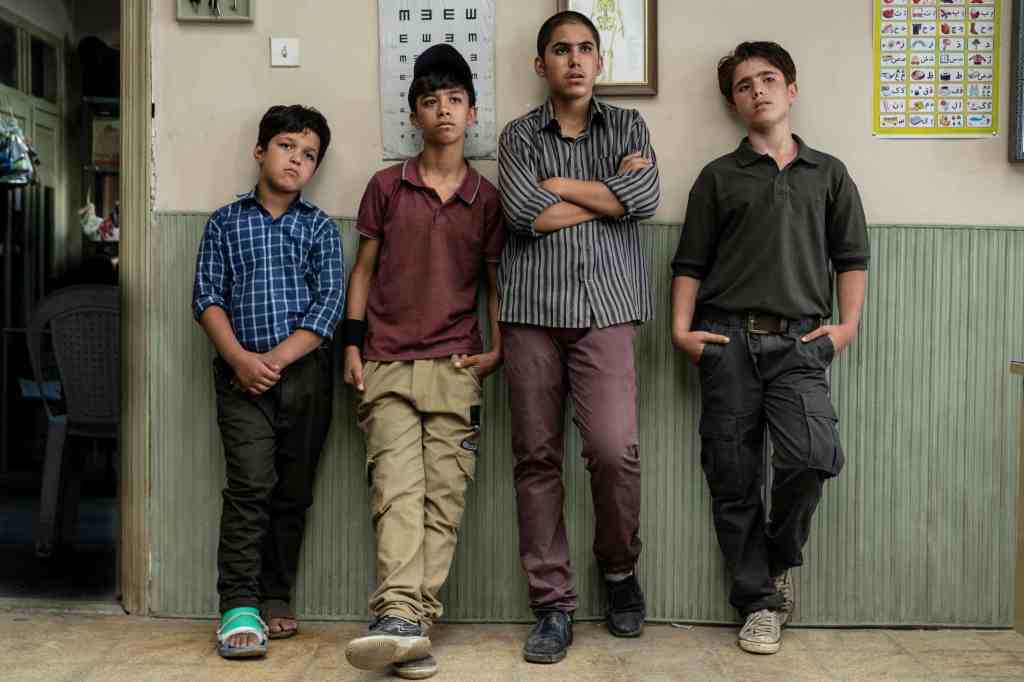
Twelve-year-old Ali (Roohollah Zamani) survives with three other boys by committing small thefts. A local criminal gives them a task: to find a hidden treasure that can be reached through a tunnel beneath a school. To dig their way there without drawing attention, the boys must enroll in classes and become regular students.
The school, symbolically named Sun, focuses on educating socially disadvantaged children. Its teacher, Rafie (Javad Ezzati), appears as a tolerant idealist and a voice for those who are systematically ignored. He gives a chance even to boys who apply after the school year has already begun. At the same time, the institution struggles with financial problems and faces closure due to unpaid rent.
The boys’ fathers are absent for various reasons. The youngest member of Ali’s group, Abolfazl (Abolfazl Shirzad), comes from a family of undocumented Afghan migrants, and his older sister Zahra (Shamila Shirzad) is one of the film’s most powerful characters. Although she is still a child, she is forced to take on the role of an adult woman. She is keenly aware of the risk that revealing her family’s Afghan identity would lead to detention and eventual deportation from Iran. Through her character, Majidi convincingly illustrates the extreme vulnerability of these children, especially in the moment when Zahra loses her dignity inside a detention facility.
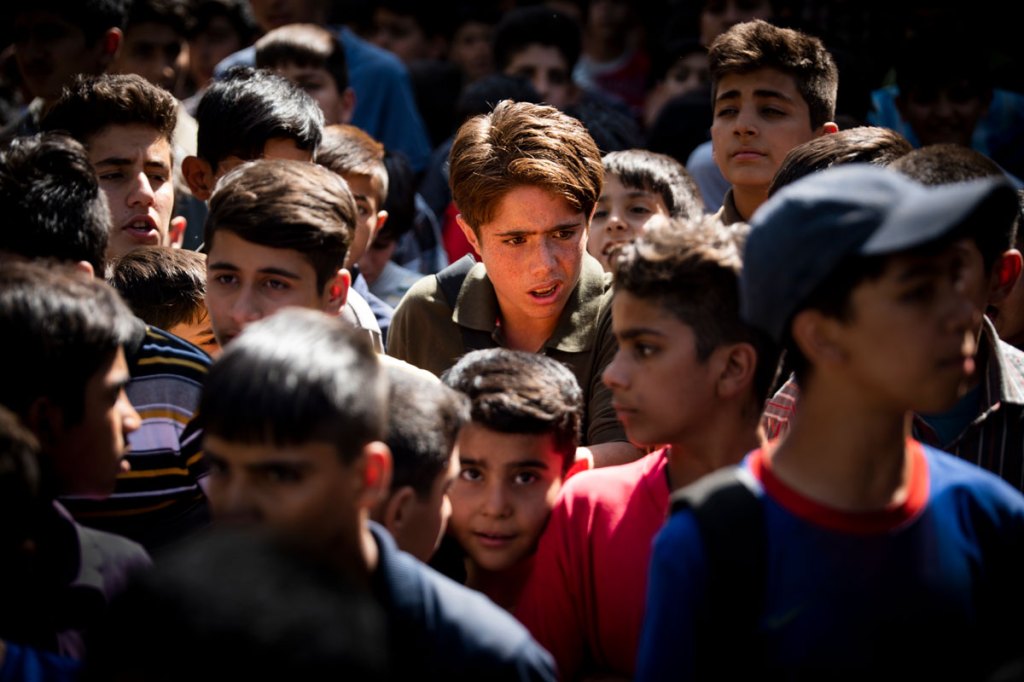
The Iranian film offers a balanced view of its child protagonists. With empathy and credibility, it portrays their suffering without idealizing them. Ali often acts harshly and ruthlessly, even toward his own friends. His rough behavior contrasts sharply with the frightened look and pleading voice of the young actor. Gradually, the viewer comes to understand that Ali’s cruelty grows out of constant inner pain: he needs money to get his mother out of psychiatric care and secure independent housing for her. Zamani’s performance powerfully combines toughness and fragility, revealing a character driven by a deep, almost ecstatic love for his mother.
Sun Children is a strong socially critical film dominated by a realistic style. At the same time, Majidi does not abandon the more aesthetic and poetic elements familiar from his earlier work. The opening scene, in which the children hide in the tight space beneath a car, turns into an escape through a shopping mall and then into a sunlit urban space, culminating in a swim in a circular pool. Seen from above as they swim, the children form a symbolic image reminiscent of rays of sunlight.
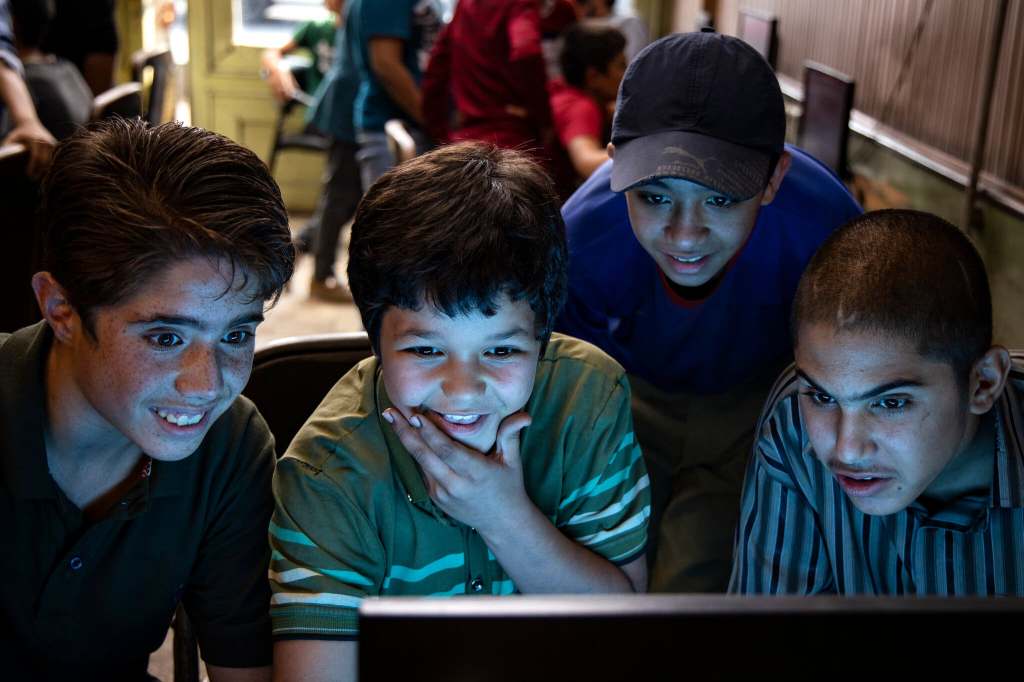
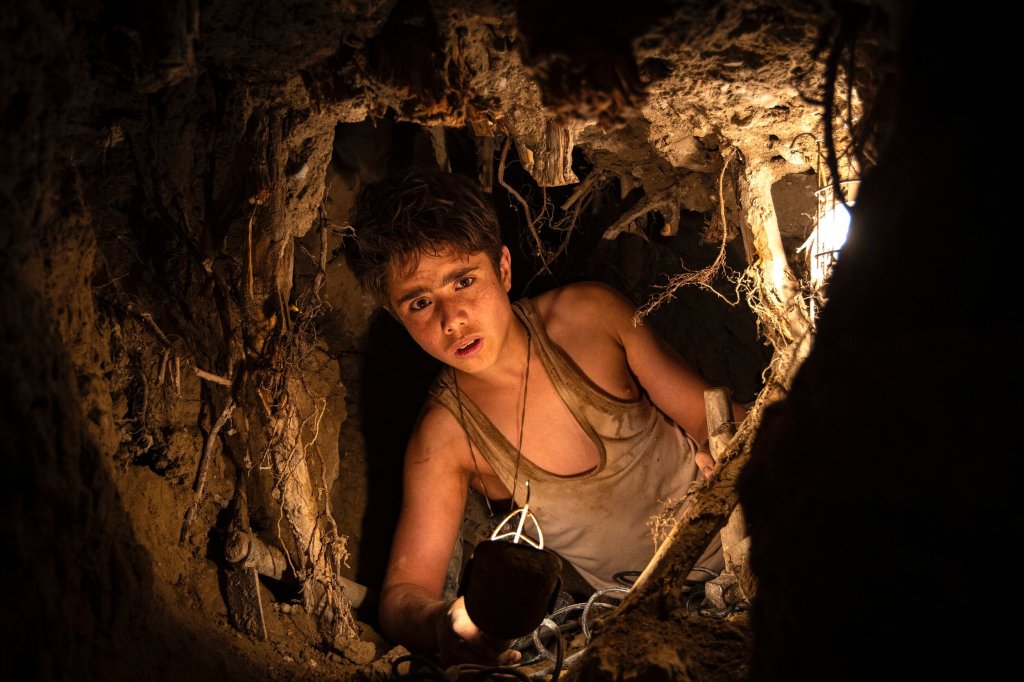
The contrast between confined spaces and the open city becomes a key narrative principle in an otherwise relatively simple story. The claustrophobic underground tunnel the boys dig through is not only a path to the supposed treasure, but also an allegory of the fragility of their world, where solid ground constantly turns into dust and rubble.
Here, the underground space functions as a counterpoint to images of a sunlit sky and freely flying birds. In Majidi’s work, space is not merely a realistic backdrop, but an archetypal element—a vertical axis stretching from an underground “prison” up to the infinite sky.
Compared to Majidi’s earlier “children’s films,” Sun Children leans more consistently toward a realist poetics. Films such as The Father (Pedar, 1996), Children of Heaven (Bacheha-ye aseman, 1997), and The Color of Paradise (Rang-e khoda, 1999) ultimately redeemed the bitter fates of their young protagonists through reconciliation or a sense of mystical love. This approach, which has led critics to compare Majidi’s work to Sufi mysticism, contrasts with Sun Children, which builds its narrative on a gradual worsening of the situation.
This approach may leave the viewer with a dark impression. In reality, however, the film does not lack hope. Beneath the surface of apparent pessimism, it searches for the divine in human solidarity, present even in the midst of harsh conditions.
The symbolic transition from rain to sun is easy to miss, as Majidi cleverly conceals it within a tense tunnel sequence. Along with Ali, we come to realize that the true treasure is not a chest of gold hidden underground, but light itself—the Sun. In this way, the director does not abandon the idealism of his 1990s work, but expresses it more quietly. It is precisely this restraint that allows Sun Children to be seen as a more mature film.
Enjoyed the read? If you’d like to support my blog, you can buy me a coffee or share this article with others who might find it interesting. Thanks for reading!

 Iran Zamin Cinema
Leave a comment