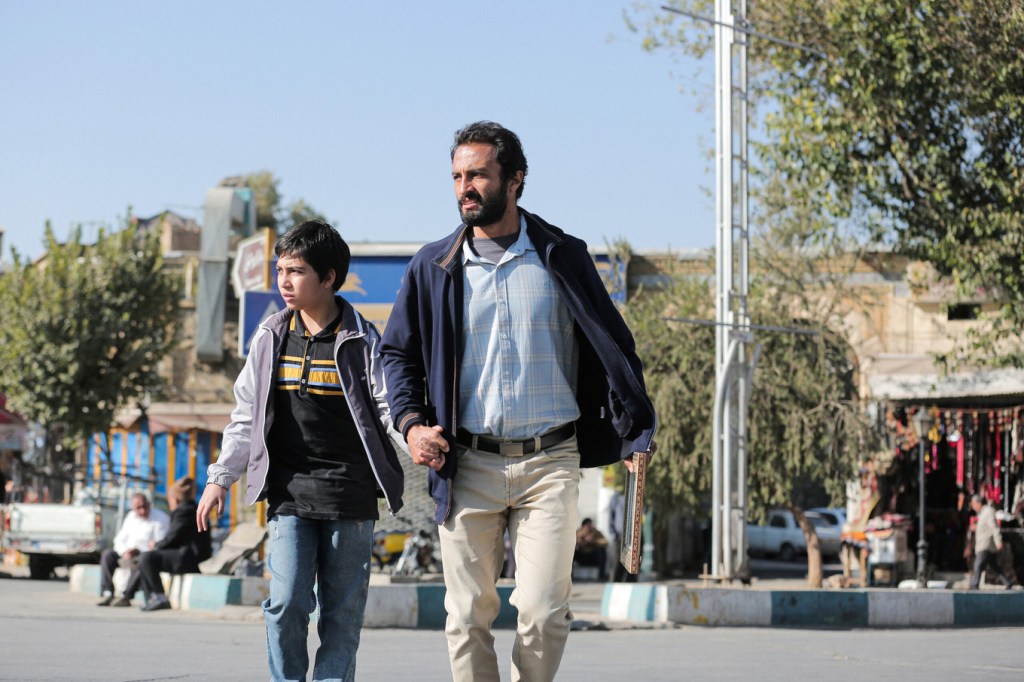
A Hero (Ghahreman, 2021) by Asghar Farhadi won the Grand Prix at Cannes in 2021 and went on to represent Iran at the Oscars the following year. In A Hero, the director combines dramatic structure and realistic style more masterfully than in The Past (Le passé, 2013), and it’s probably his best directorial work since A Separation (Jodaei-ye Nader az Simin, 2011). However, A Hero is not just another of Farhadi’s carefully narrated family dramas, a collection that began with Fireworks Wednesday (Chaharshanbe-soori, 2006). This time, the director subtly weaves in mythological elements more typical of his early work.
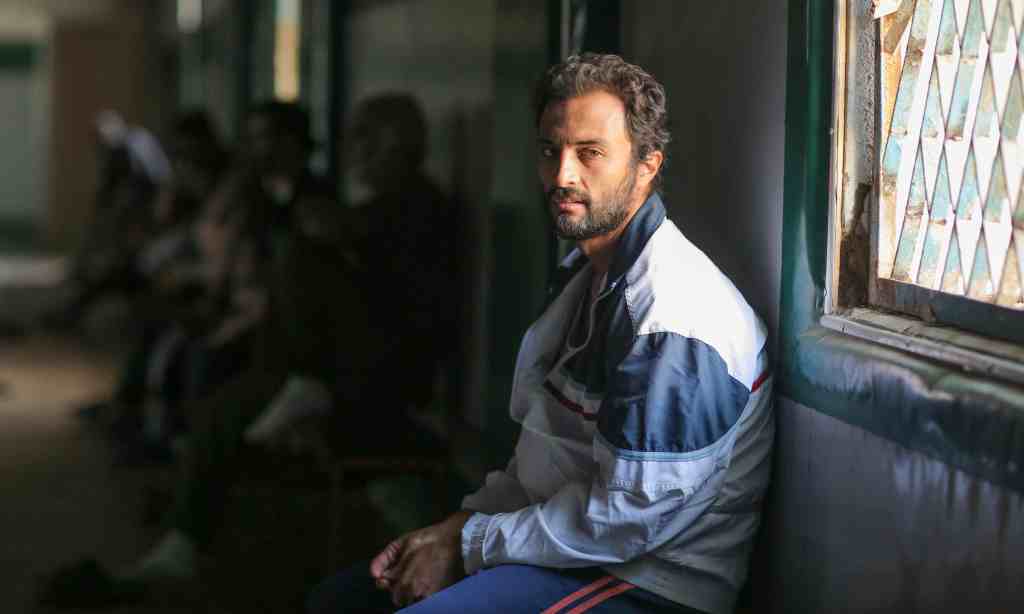
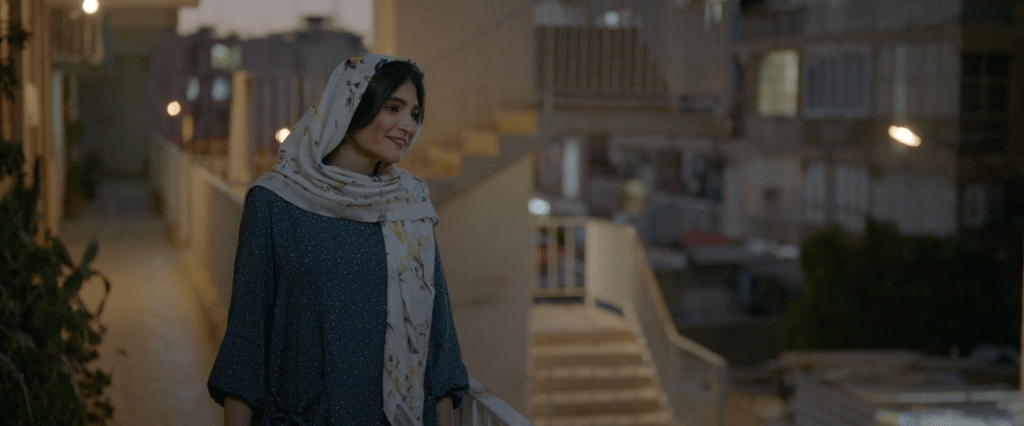
When Rahim (Amir Jadidi) leaves prison at the beginning of the film, we don’t see a stereotypical criminal but a likeable and contented man with a humble smile. He tries to catch a bus, but it reluctantly drives away. Throughout the story, Rahim never manages to match the pace of a society that judges him not by his intentions but by how others portray him—in the media and on social networks. Farhadi shows a society that views the protagonist in binary terms: it either idealizes him or condemns him.
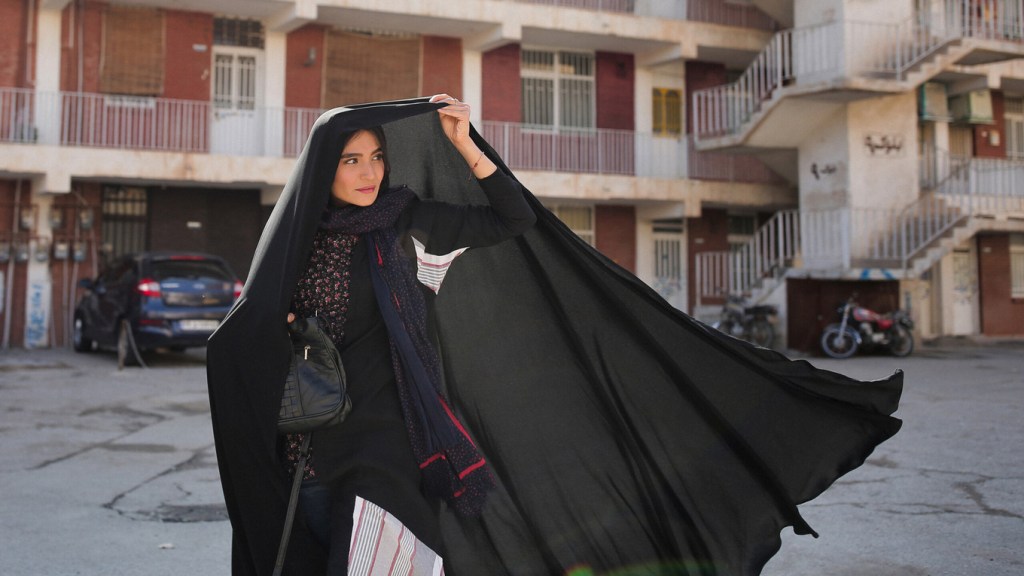
The image of a hero begins to take shape when Rahim decides to return a lost handbag to its owner, which his girlfriend Farkhondeh (Sahar Goldoost) happened to find. The bag’s main contents—valuable gold coins—could have helped Rahim pay off his debt. This virtuous act is used by the prison for its own self-promotion, and a charity organizes a public fundraiser for the new hero.
Rahim tells the media and the public what they want to hear. At first, he steps into the role of a hero reluctantly; but once this ideal image is created, he seizes the opportunity and tries to benefit from it. The heroic image starts to fade when Rahim’s main opponent—his creditor Bahram (Mohsen Tanabandeh)—questions the greatness of his act. The clash with Bahram, who refuses to forgive the debt due to personal resentment, echoes the plot of Farhadi’s early film Beautiful City (Shahr-e ziba, 2004).
Farhadi’s style rests on the combination of carefully crafted storytelling, realism, and unspoken meanings. The tragic conclusions of his films are often triggered by chance events or the magnification of innocent lies. Farhadi’s characters move along a thin line between truth and falsehood. Rahim does not have full control over his life—his fate depends on whether society accepts his words as truthful. He cannot defend himself before the public, and his son Siavash (Saleh Karimaei), who has a speech disorder, also fails in defending the family’s honor.
Farhadi hasn’t created an ideal hero; he has remained with the kind of morally ambiguous characters we know from his previous works. Rahim’s decision to return the lost bag stems from a profound sense of moral duty. Later, when he needs to lie, he does so unwillingly. We usually see him as a humble and calm man, but in moments of crisis he acts impulsively. He is not the ideal protagonist the media and institutions want, but neither is he the liar his bitter creditor tries to make him out to be.
The Role of Persian Myth in Farhadi’s Moral Drama
With A Hero, the director moves from the modern settings of Tehran to the ancient city of Shiraz. The film features a Shirazi Persian accent, which gives the storytelling an authentic touch. Farhadi focuses mainly on the city’s poor neighborhoods while also highlighting its ancient character.
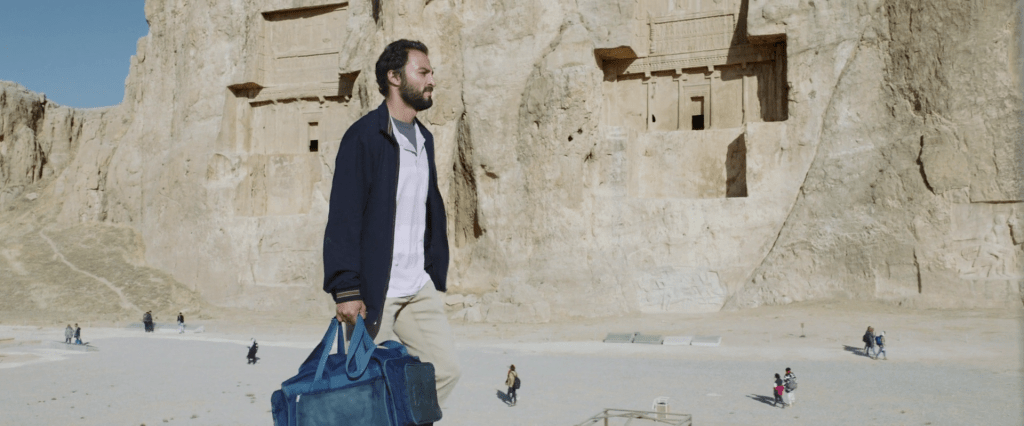
Although the film doesn’t show the famous tombs of poets Hafez and Saadi, it references Shiraz’s historical richness through other locations and motifs. At the beginning, Rahim visits the ancient complex of royal rock tombs at Naqsh-e Rostam—a site linked to Ferdowsi’s 11th-century epic Shahnameh. While the story never returns to these locations, the spirit of cultural heritage quietly lingers throughout the film.
Rahim is a calligrapher, and his art appears as a subtle motif in the story. The film’s title in the opening sequence, as well as the announcements of the found bag, are written in the calligraphic style nastaliq. The essence of Persian tradition is conveyed through the sounds of the Iranian instruments tombak and santur, which appear on screen.
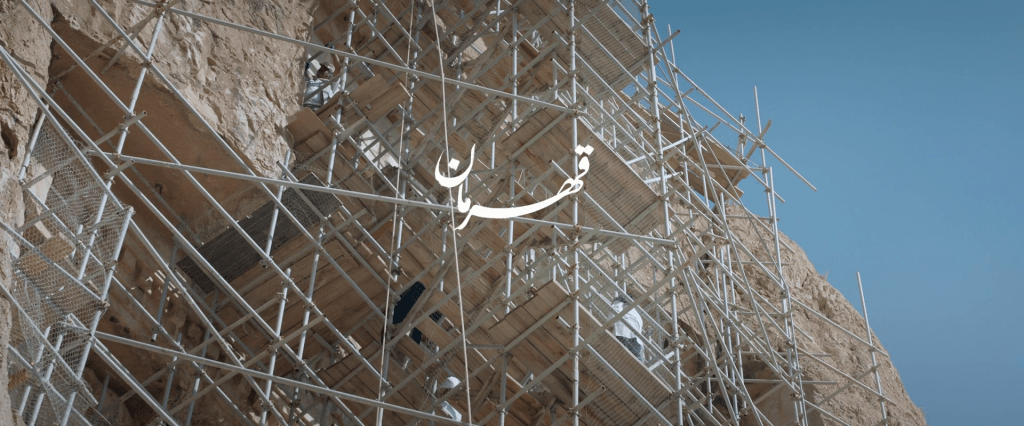
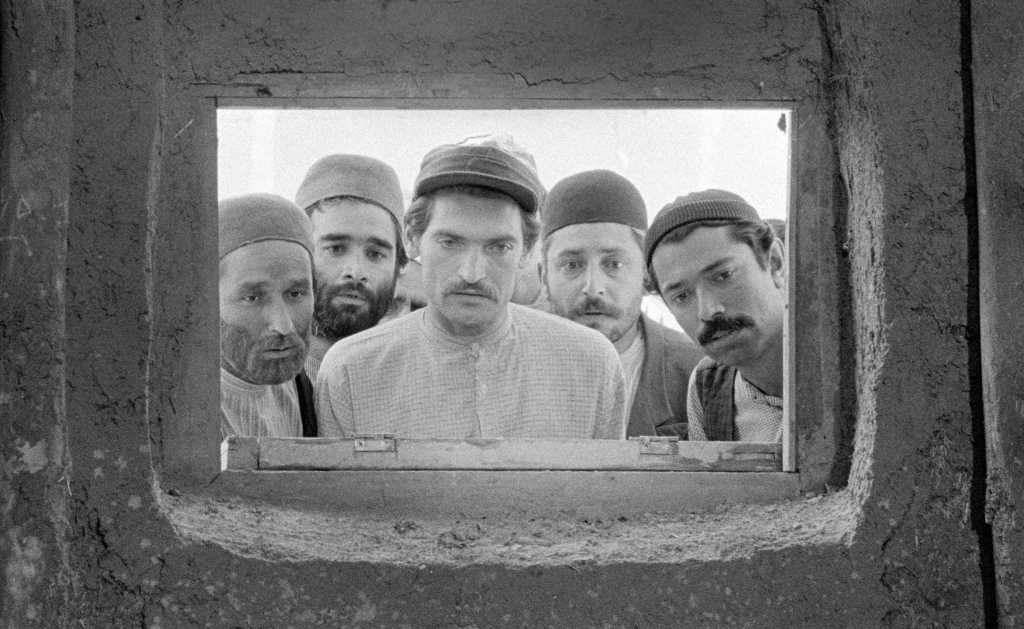
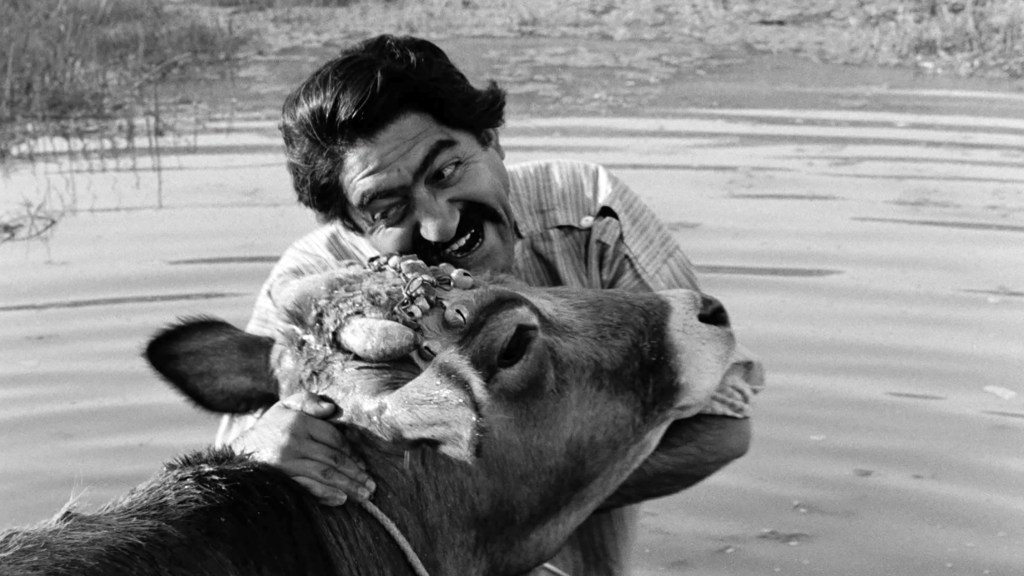
Unlike Iranian film director Majid Majidi, the realist Farhadi is not usually associated with stylization, archetypes, or mysticism. Yet his debut Dancing in the Dust (Raghs dar ghobar, 2003) plays with mythological references, particularly to the Persian dragon-slayer Garshasp, who also appears in Ferdowsi’s Shahnameh. In A Hero, the question arises: is Rahim’s fragile idealism just an archaic remnant of the past, or does it still have a place in today’s world?
Rahim’s girlfriend’s exclamation—“I would die for him!”—is not just a polite phrase but a devoted expression of love, echoing the depth of Persian ghazals. Rahim’s son Siavash seems meant to remind us of one of Shahnameh’s heroes. Ferdowsi’s Siavash is a symbol of moral purity. He strives to act truthfully and justly in a world full of intrigue and evil—a plot core similar to A Hero. But the Iranian director is not telling a myth; he is telling a realist story. Unlike many other heroes in realist fiction, Rahim doesn’t end up in complete psychological collapse—he accepts his fate and finds peace with his situation.
Farhadi’s film is a multilayered work that invites repeated viewing and interpretation from many angles. Beyond its social plot, it offers reflections on moral integrity, truth, and media representation. It questions the relationship between modern self-serving society and the remnants of archaic idealism. Its hidden mythology can be seen as Farhadi’s return to his early work, particularly the symbolically tuned Dancing in the Dust. At the same time, he remains faithful to his later realism and the formal techniques familiar from A Separation. This seamless blending of mythology into a realistic style and social drama makes A Hero a remarkable work in the history of Iranian cinema.
Enjoyed the read? If you’d like to support my blog, you can buy me a coffee or share this article with others who might find it interesting. Thanks for reading!

 Iran Zamin Cinema
Leave a comment