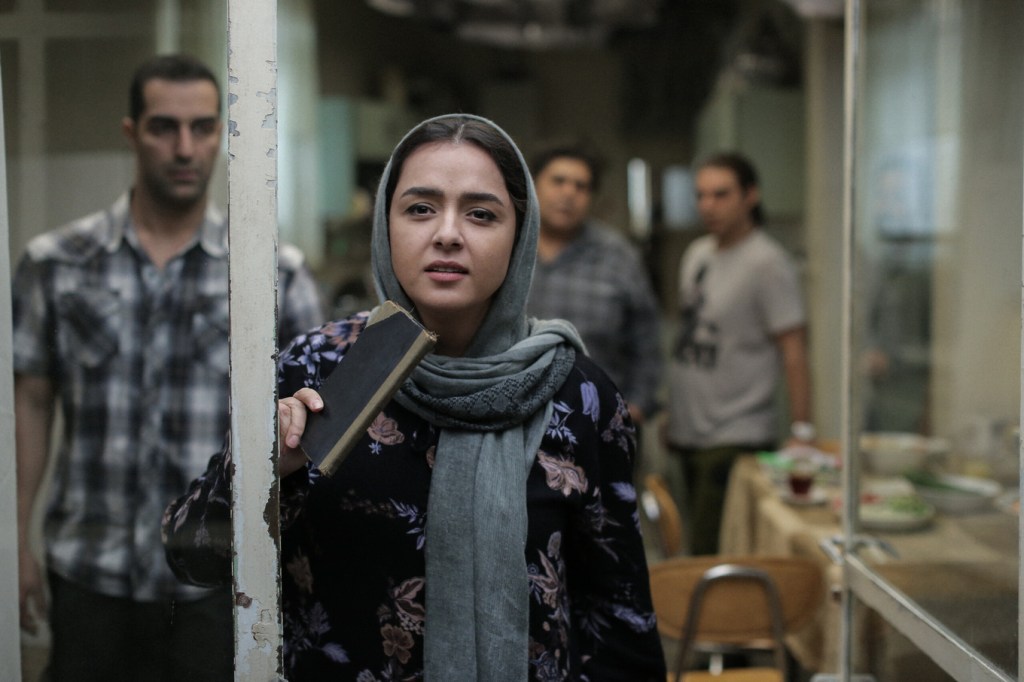
Saeed Roustaee’s satirical film Leila’s Brothers (Baradaran-e Leila) was screened in the main competition at the Cannes Film Festival in 2022, where it won the prestigious FIPRESCI Prize. This nearly three-hour-long family drama, set in present-day Tehran, follows the lives of five siblings trying to escape poverty and a hopeless situation. Roustaee has created a work that stands among the best examples of contemporary Iranian cinema in the past decade.
At the same time, it’s important to say that Leila’s Brothers is not an easy film. Its complexity, morally ambiguous characters, and challenging social issues demand a lot from the viewer. Roustaee deliberately avoids explaining the context or using melodramatic clichés that would make the story clearer or more appealing. Instead, he lets us fully dive into a complicated web of relationships, offering no clear guidance.
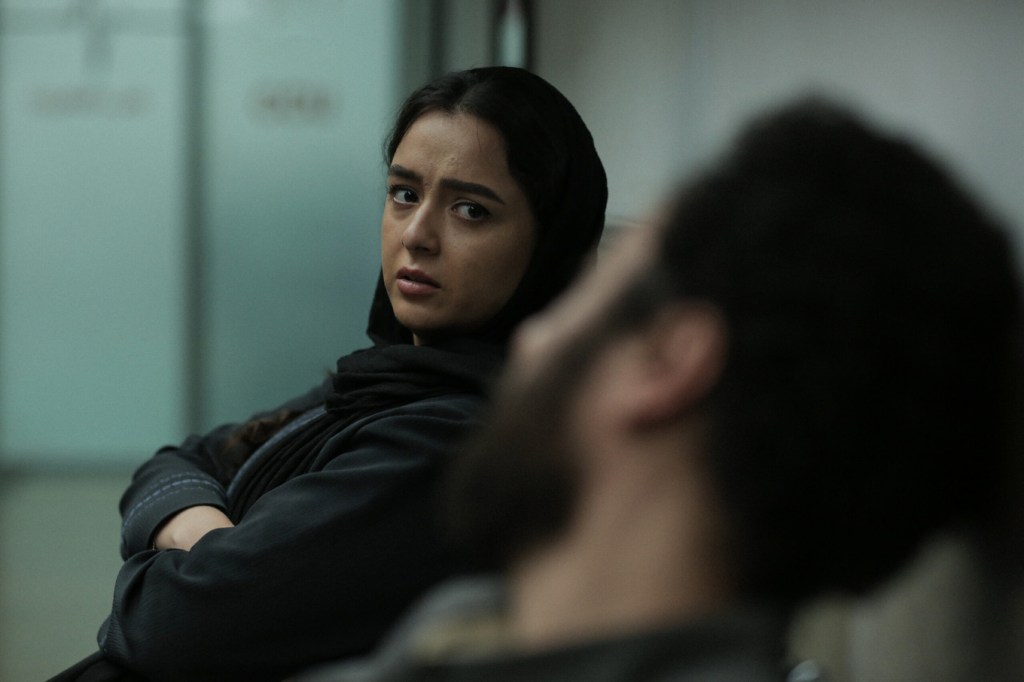
Leila (Taraneh Alidoosti) lives with her parents and four brothers, and she is the main provider for the whole family. Overweight Parviz (Farhad Aslani) works as a restroom cleaner in a shopping mall, but his salary isn’t even enough to support his own wife and children. Muscular Farhad (Mohammad Ali Mohammadi) is into American wrestling, while Manouchehr (Payman Maadi) looks for shady ways to get rich quick. The most honest of the brothers, Alireza (Navid Mohammadzadeh), moves back into the family home after the factory where he worked shuts down.
Leila comes up with a practical idea: to rent the public restroom space at the mall where Parviz works and open their own shop there. But her plan is disrupted by their father Esmail’s (Saeed Poursamimi) obsession with becoming the patriarch of their extended family—a title that became available after his cousin passed away. Bayram (Mehdi Hosseininia), the cousin’s son, suggests that Esmail might have a chance at the title if he gives a gift of 40 gold coins at the wedding of Bayram’s son. Even though this generous gift would mean spending all of Esmail’s savings, the father eventually agrees.
Honor, Family, and Social Expectations in Iran
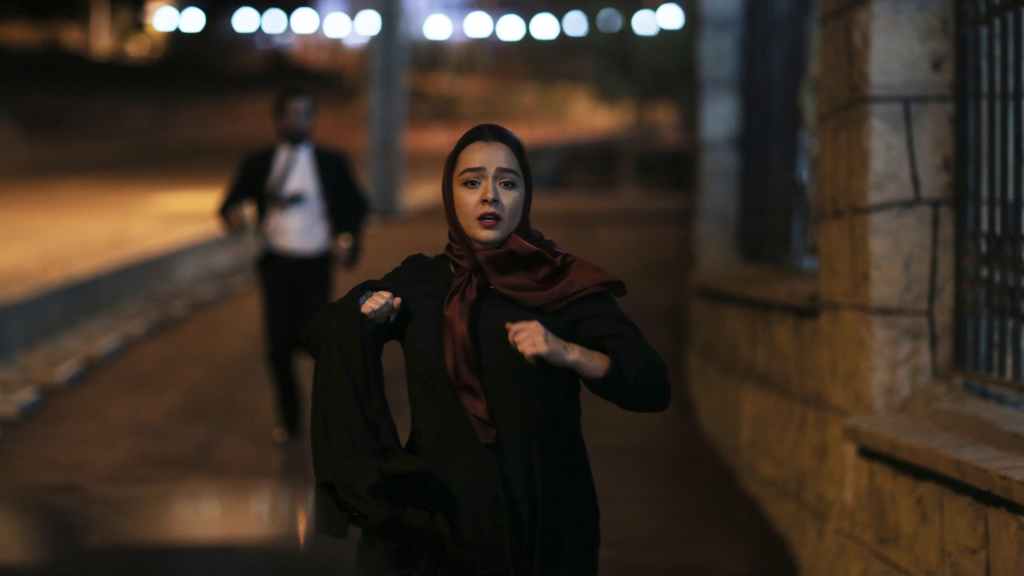
The central conflict of the satirical film arises from the clash between Leila’s determined actions and the hesitant or dismissive attitudes of the rest of the family. However, Leila’s Brothers cannot be reduced to a simple story of a woman rebelling against patriarchy. The film mocks the male characters but does not condemn them. Just like Asghar Farhadi, Roustaee avoids judging his multi-layered characters and instead presents their motivations and inner dilemmas. Alireza, feeling deeply exhausted by the chaos in his life, longs for peace and family harmony. On the other hand, Leila is willing to take risks—even at a high moral cost.
To understand the characters’ decisions, we need to consider the broader cultural context, which the film hints at without directly explaining. In Iranian society, the concept of honor—called aberoo—is extremely important. From Leila’s point of view, her father’s decision to give away gold coins at a wedding may seem like madness, but within the framework of social expectations, it has its logic.
If the viewer understands the intricate role of aberoo in Iranian society, they can better see both the good and the questionable reasons behind the actions of each side of the conflict. The brothers may be aware of their difficult situation and, to some extent, understand Leila’s practical thinking, but in the end, their emotional bond with their father guides their choices.
Besides the individual motivations, the film also focuses on the wider concept of family as a social unit. One of the key elements is the tayefeh—a family clan that used to be the foundation of social structure in Iran. While this model is no longer common in modern-day Tehran, the film shows that family and kinship ties still have a strong influence on people’s decisions. The root of the crisis lies in the family’s failure to support one another. External factors—such as the factory closure, unemployment, and broader economic issues caused in part by U.S. sanctions—contribute to the crisis but should not be seen as the only causes.
The Iranian film doesn’t try to present society as a simple sociological model, but rather as a complex network of emotions, interests, and internal conflicts. The relationships between the characters are tense and complicated—not only across generations or between genders, but also among the siblings, between mother and daughter, and between the father and his “tribal rivals.” Rivalry, jealousy, and a lack of trust are present everywhere.
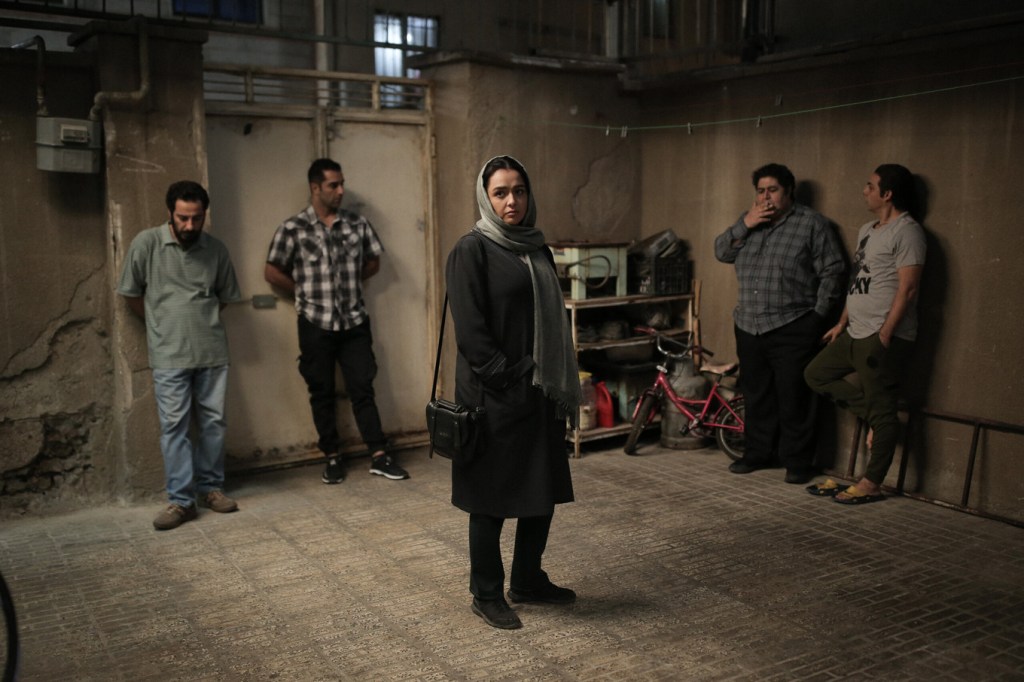
Realism and Visual Symbolism in Iranian Drama
Leila’s Brothers is a strong example of contemporary Iranian cinema, combining social critique with a nuanced cinematic style. Roustaee skillfully uses the confined apartment space and long scenes to build tension and reveal relationships in real time. His ability to direct extended, immersive scenes is one of the film’s biggest strengths—and something that is often missing in today’s socially focused cinema. In this sense, Leila’s Brothers is a uniquely valuable work.
The director’s filmmaking style follows a realistic approach, but he’s not afraid to add visual creativity. The color palette is mostly balanced and muted. The apartment interior—including the kitchen, walls, and characters’ clothing—is shown in soft pastel tones of green, cream, and gray. When the story shifts to unusual or luxurious settings, the colors become more vivid and contrasting, giving them a symbolic meaning.
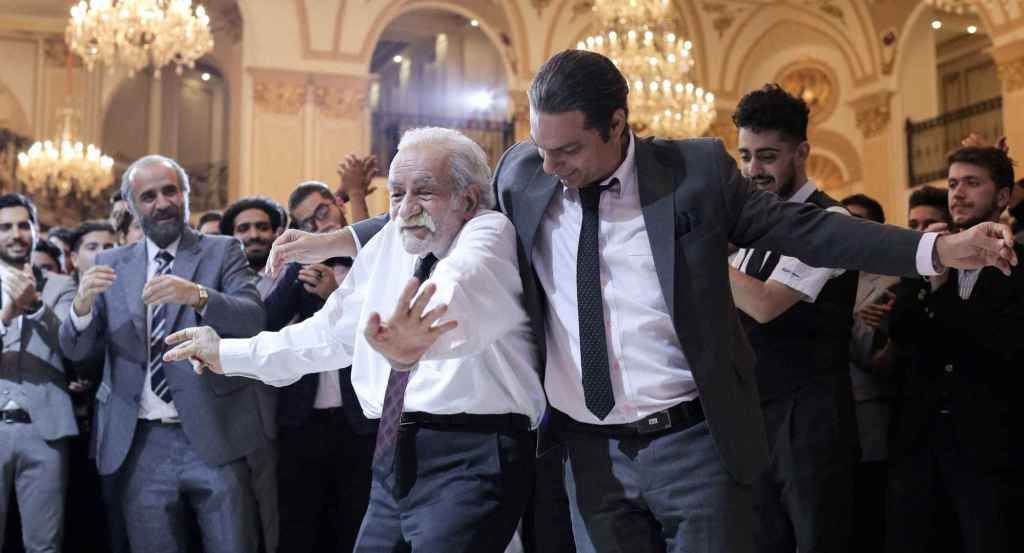
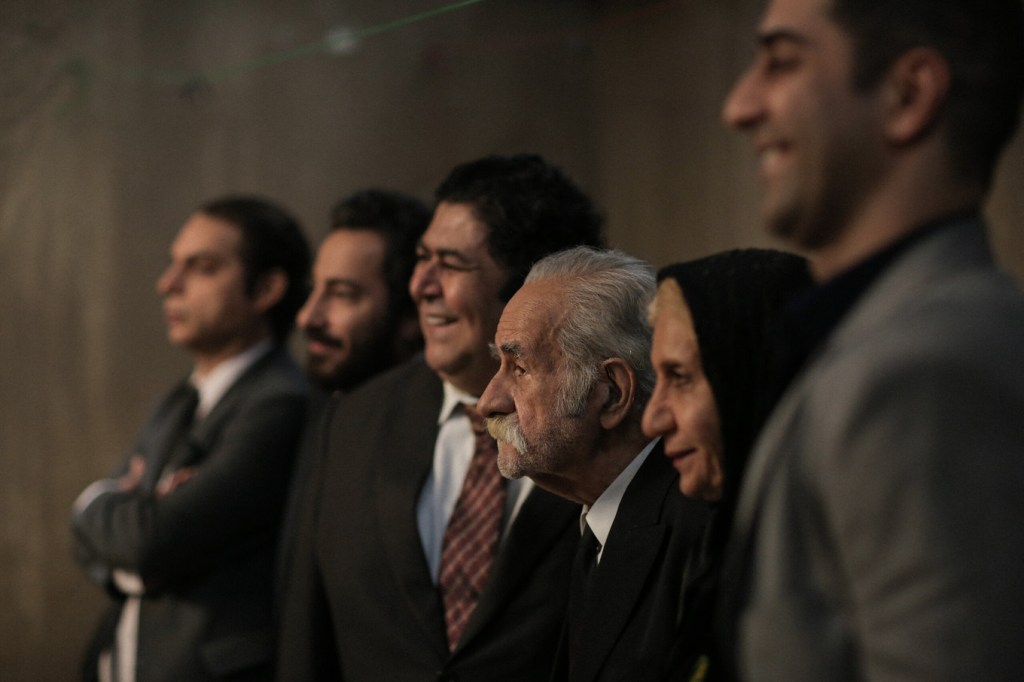
The scene set in a shady car dealership is a great example of how Roustaee uses color and lighting in a way that feels visually striking yet remains realistic. He works with cold blue tones and contrasting golden light from a modern elevator, highlighting a temporary sense of luxury. The film’s visual style here helps underline the gap between different social classes. A similar contrast appears on a larger scale during the film’s pivotal wedding celebration. In that sequence, the golden glow of chandeliers in the grand hall is set against the cool light of spotlights that shine on the father, who briefly steps into the role of patriarch of the clan.
Leila’s Brothers is an Iranian social drama with a complex structure—expansive, layered, and full of voices. It’s reminiscent of classic novels, where every character has their own unique traits and inner struggles. Roustaee masterfully balances empathy with pragmatism, and instead of offering a clear moral message, he presents a complex view of human behavior. The film doesn’t give us easy answers—it teaches us to observe reality more carefully and with greater sensitivity, free from oversimplified categories. That’s its greatest strength—and also the challenge it poses to the viewer.
If you enjoyed this review, please consider supporting the blog by buying me a coffee—every little contribution helps. And don’t forget to share the article with friends who love cinema as much as you do.

 Iran Zamin Cinema
Leave a comment